Fall Protection PPE – Everything from a Single Source
PSAgA stands for personal protective equipment against falls from heights: safety harnesses, lanyards, fall arrest devices, and the associated anchorage systems. It is more than just a legal requirement—it is the last line of defense when all other measures fail. It is required wherever there is a risk of falling and technical protective measures, such as guardrails, cannot be implemented. At Cramer, you get the complete solution from a single source: purchase equipment, train employees, and have the required annual inspection performed by a qualified person.
Restraint or fall arrest? This distinction determines which equipment is permitted.
Restraint system: It prevents the employee from reaching the edge where a fall could occur in the first place. The lanyard is adjusted to be so short that a fall is not possible at all. The equipment does not need to absorb any fall energy.
Fall-arrest system: It stops a fall that has already occurred. This requires a safety harness, a fall arrest device, or a fall protection device—and an anchor point that absorbs the forces. The fall zone below must be clear.
Anyone who mistakes a restraint system for a fall arrest system will have the wrong equipment in an emergency. That’s why the first step is a risk assessment, not purchasing equipment. We can advise you on this.
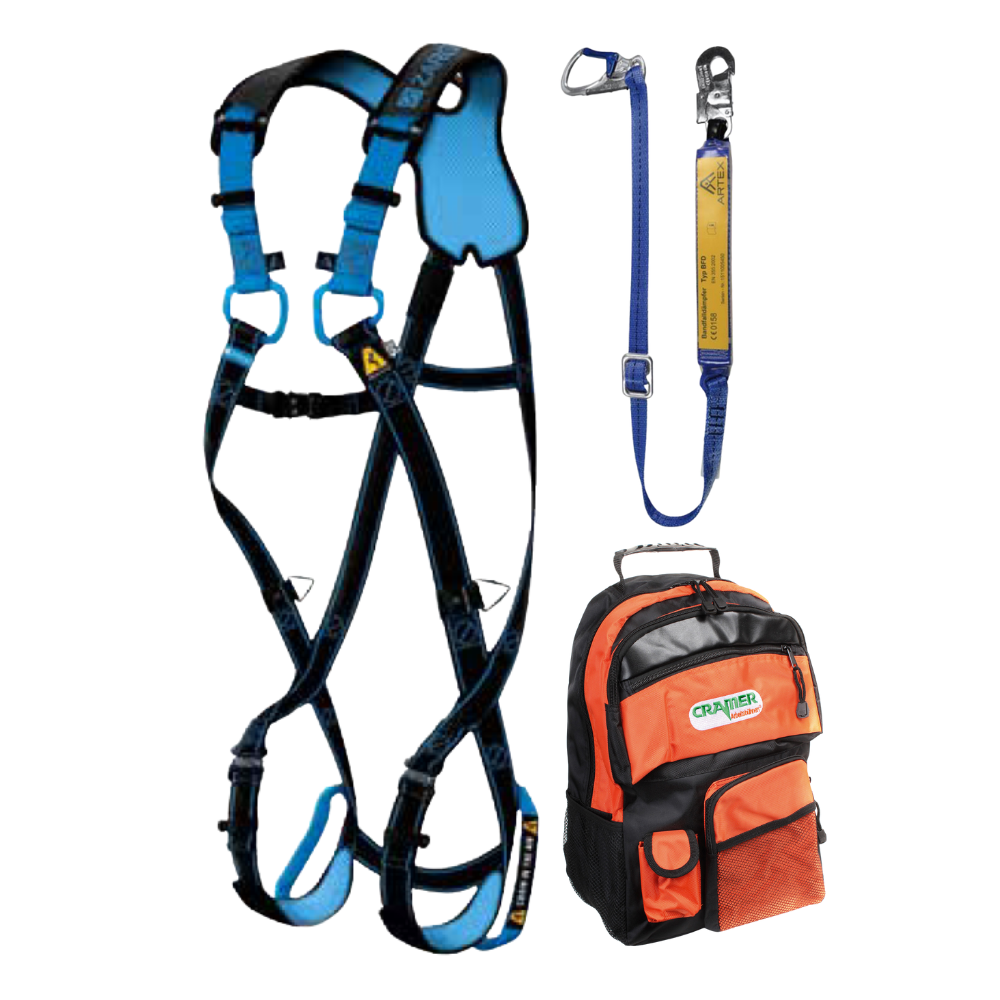
Buy Equipment
Safety harnesses, lanyards, fall arrest devices, and ready-to-use kits from selected manufacturers—with advice on choosing the right equipment
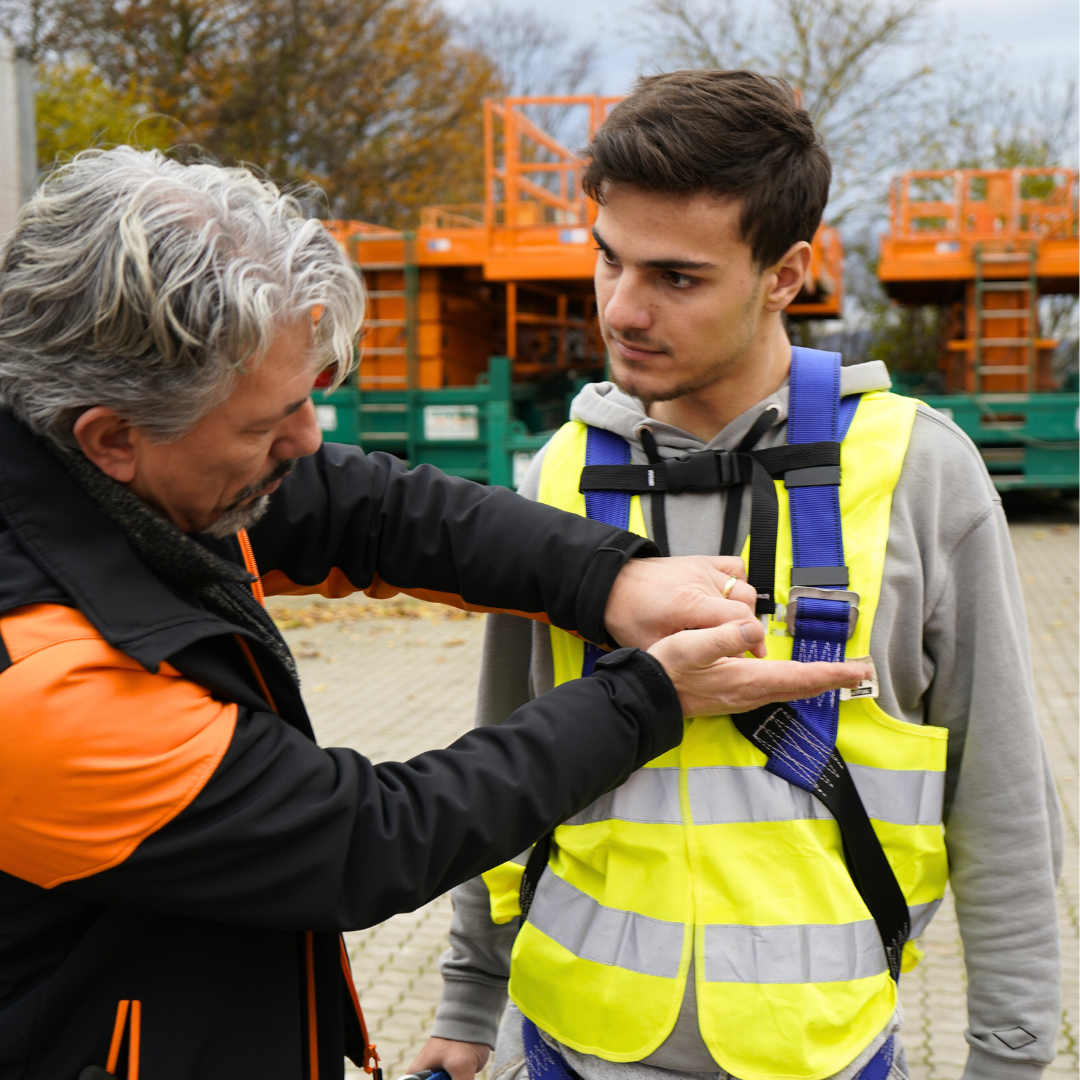
Train employees
Training and annual instruction, with hands-on practice using real equipment—including rescue from heights

Have it inspected
Periodic inspection by a qualified person—documented, with a clear statement regarding continued use
What does PSAgA stand for?
Personal protective equipment for fall protection.
When is it required?
Anywhere there is a risk of falling and technical protective measures such as guardrails or covers cannot be implemented. That is why the first step is always a risk assessment—it determines whether fall protection equipment is necessary and, if so, which type.
How often does the equipment need to be inspected?
Generally once a year, by a qualified person.
How often do employees need to be trained?
Also annually.
Can I get everything I need at Cramer Arbeitsbühnen?
Equipment, training, and testing—yes.
Questions About Personal Protective Equipment (PPE) for Fall Protection
Here's how it works:Get in touch, send in your PPE or drop it off—we'll take care of the rest. After the inspection, you'll receive your equipment back by mail or can pick it up.